




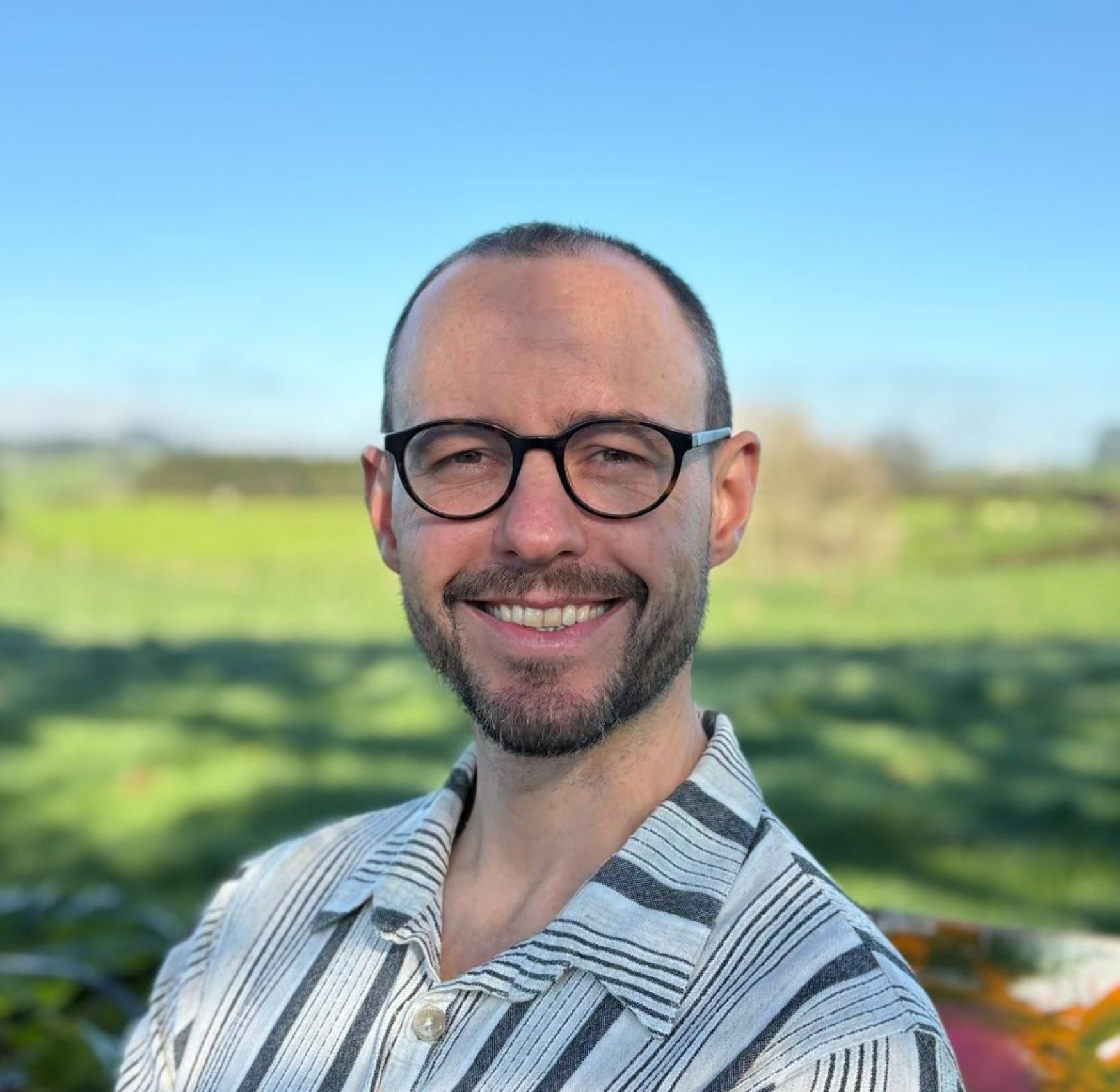
Since graduating from the Master of Creative Arts Therapy at Whitecliffe in 2024, this alumnus has built a dynamic and meaningful practice that integrates his background in movement, theatre, and somatic practice into his work as a Creative Arts Therapist.
Currently working full-time as an arts therapist in a college setting, he supports adolescents navigating complex life transitions. Alongside this, he has established Soma Arts Therapies, his private clinical practice, where he works with adults using integrative creative arts therapy approaches to support healing and personal growth.
His work reflects the growing role of Creative Arts Therapy in mental health and wellbeing, particularly in creating alternative pathways for expression, connection, and recovery.
Before training as a therapist, his professional life was rooted in the arts. With a background in live performance, theatre, and yoga practice, he spent years exploring how creative and embodied practices influence wellbeing.
Through completing a 500-hour yoga training and working as both a practitioner and teacher, he experienced firsthand how movement and creativity could support thriving.
“Through years of performance and yoga practice, I experienced how creative and movement-based practices significantly supported my wellbeing.”
This realisation led him to seek a pathway where he could integrate his artistic experience with a clinical framework, ultimately leading him to study Creative Arts Therapy at Whitecliffe.
“Creative Arts Therapy became the place where I could integrate my passion, skills, and experience. It offered the clinical framework I was looking for to support others meaningfully.”
Reflecting on his time studying the Master of Creative Arts Therapy, he describes the experience as deeply transformative, both personally and professionally.
“The experience was transformative. It allowed me to articulate my previous arts experiences within therapeutic frameworks and integrate them into my developing practice.”
The programme provided a rigorous yet supportive environment, enabling him to explore the intersection of:
• Art and creative practice
• Psychology and therapeutic frameworks
• Somatic and body-based approaches
This integration helped shape his identity as both an artist and a clinician, giving him the tools to work confidently across diverse therapeutic contexts.
Since graduating, his journey has focused on stepping fully into his role as a therapist while continuing to honour his creative roots.
“It has been a journey of embracing my identity as both a clinician and an artist.”
Working within a college environment has provided valuable experience in a fast-paced, high-need setting, where he supports young people through critical stages of development.
At the same time, establishing Soma Arts Therapies has allowed him to create a dedicated space for individual therapeutic work, offering one-on-one sessions grounded in integrative arts therapy and somatic awareness.
A key part of his transition into professional practice was the clinical placement component of the programme.
“The clinical placement was invaluable. It provided a grounded space to build my clinical awareness through real-world practice, allowing me to move from theory to reality.”
This hands-on experience enabled him to develop his voice as a therapist, one grounded in both somatic awareness and the expressive power of creative practice.
“The programme helped me find my voice as a therapist, rooted in the power of the creative process and the support of arts materials.”
For those considering a future in Creative Arts Therapy, he offers thoughtful and honest guidance.
“It is a demanding and deeply rewarding path that requires you to be as curious about your own internal world as you are about the worlds of your future clients.”
He encourages prospective students to consider whether they are drawn to forms of healing that extend beyond words alone.
“If you believe that words are not the only way to heal, this study might provide the anchor needed to support others meaningfully.”
The Creative Arts Therapy programmes at Whitecliffe prepare students to work across a range of settings, including:
• Education and youth support environments
• Mental health and wellbeing services
• Private clinical practice
• Community and culturally responsive care
Whitecliffe offers a supportive and reflective learning environment where students can develop both clinical capability and creative identity.
